Toleron is built at the KSF laboratory in Tuttlingen, on a machine park that spans tool, surface, profile and cylindrical grinding, Swiss-type and toolroom turning, and precision milling. 4 machines are connected today, on three controller families and one machine with no controller at all — and every capability on this site was developed and tested on them.
Every connected machine and the data it really delivers. Switch machines to compare a grinder read from its controller with one measured by sensors alone.
Choose a machine ·1 / 4
5-axis tool and profile grinding centre
A.Haas Multigrind CB
IDLE
Live preview · status from: controller
Process signal
live · added sensor
—
Spindle current
live · added sensor
—
Machine cycle signal
live · from the machine
—
Spindle load
live · from the controller
—
Illustrative preview: which signals are shown and the course of a machining cycle match the real setup on this machine; the curves, values and timings are simulated in your browser, not streamed from the laboratory.About the machine
Laboratory topology
Four connected machines, their boxes, one server in the house.
Every box in this diagram is a real device. The AI box evaluates the tool grinder's data in the local network; the grinder without a controller reports its state through a retrofitted sensor.
01 · 4 machines
Grinding
Tool, surface, profile and cylindrical grinding — the process class Toleron is developed on, where contact is short and small differences decide.
Connected to Toleron
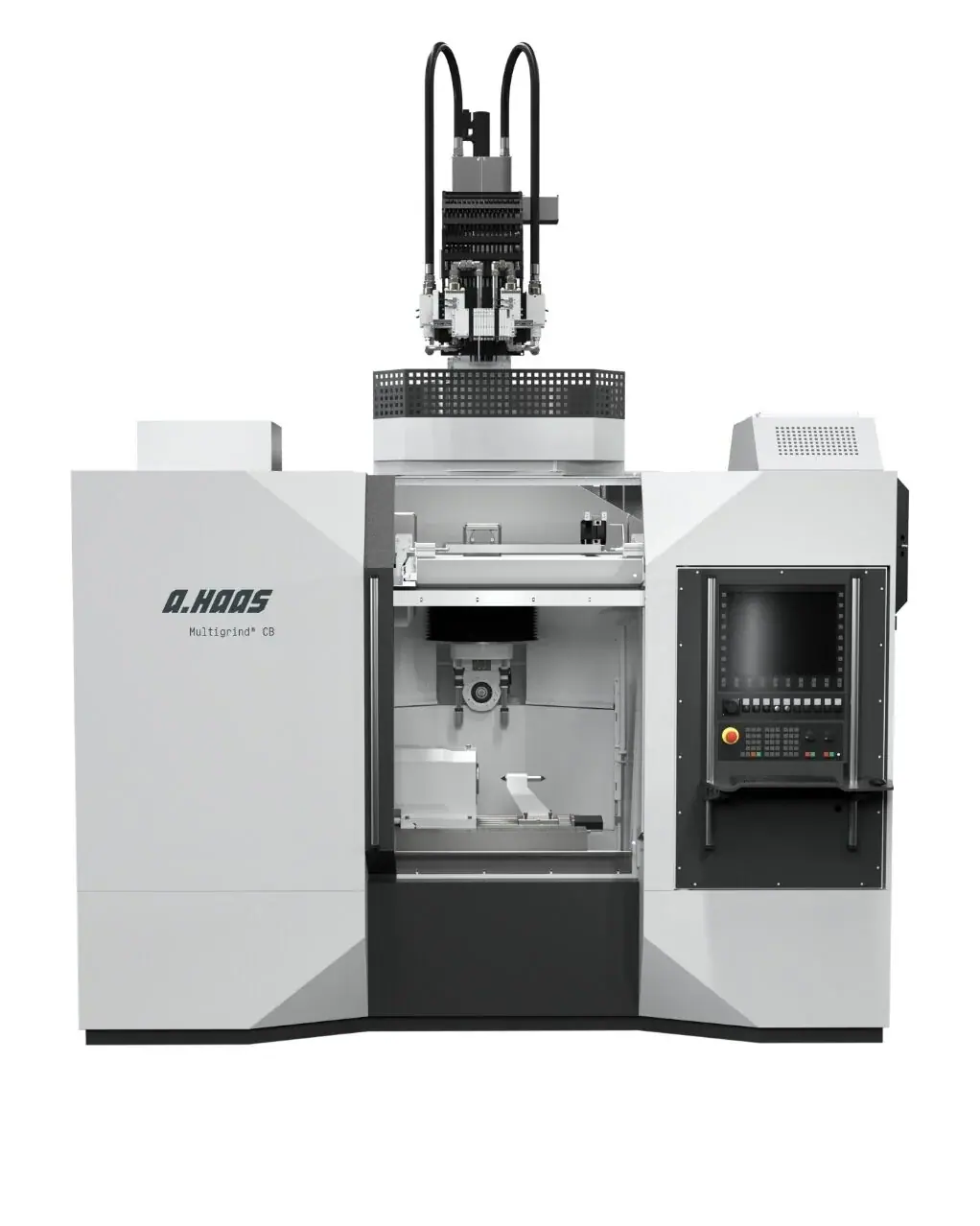
5-axis tool and profile grinding centre
A.Haas Multigrind CB
Siemens Sinumerik 840D sl
The most densely equipped machine in the lab: controller data, several added sensors and a signal for every pass — plus the AI box in its control cabinet. The reference environment for the grinding-wheel condition model.
From the controller
Added sensors
Status, program and alarms word for word, straight from the controller
Added sensors on the spindle and the grinding process
A signal from the machine marks every pass
Connected to Toleron
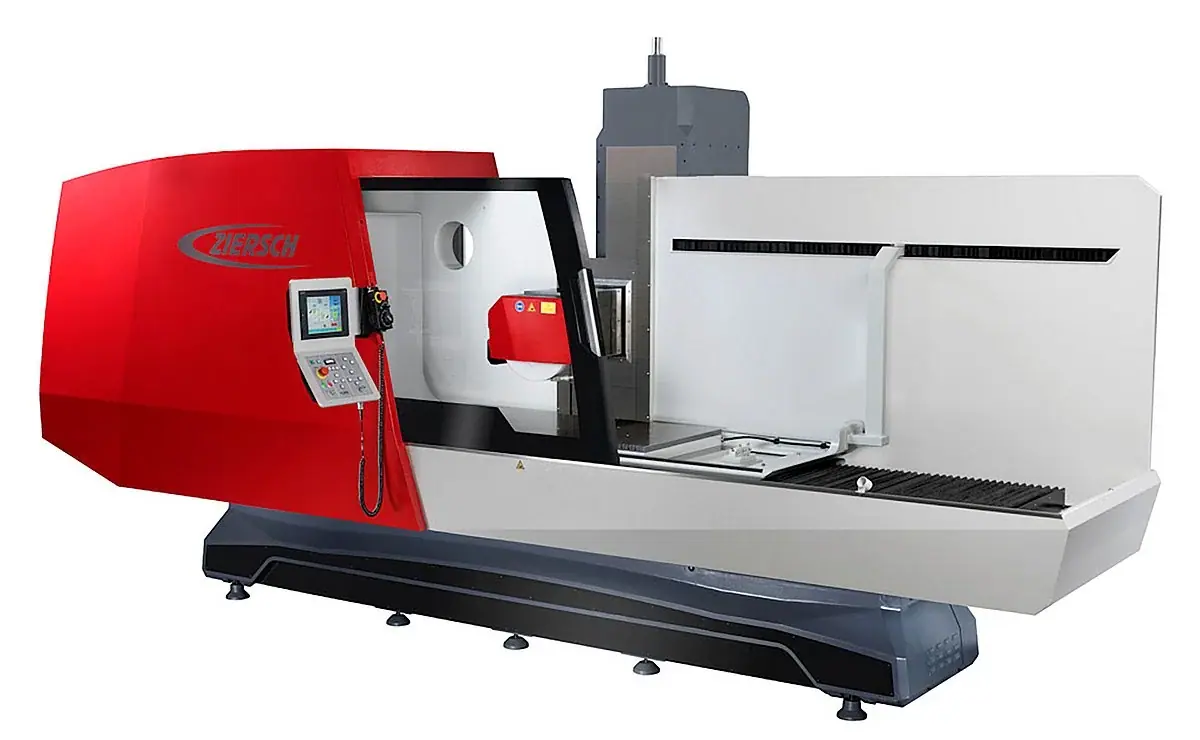
Surface grinding machine
Ziersch surface grinder
A grinder with no controller interface at all — and therefore the proof that such a machine can still be measured. Its state comes from a retrofitted sensor and is marked as derived everywhere it appears.
Added sensors
Machine state from a retrofitted sensor on the spindle
Two more sensors on the grinding process
Machine park
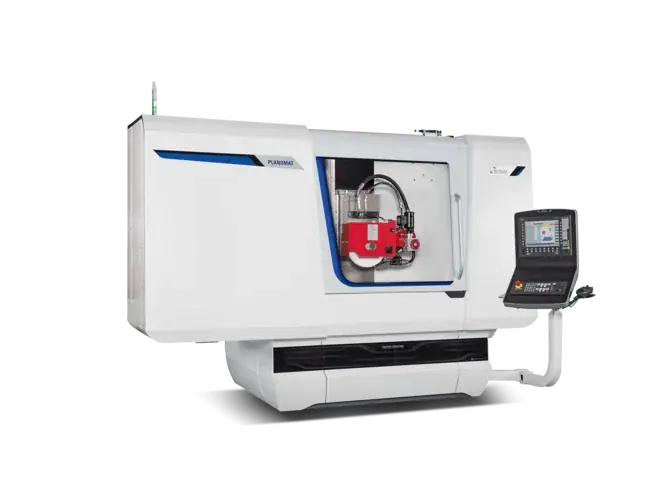
Surface and profile grinding machine
Blohm Planomat
A CNC surface and profile grinder in the laboratory's grinding group — the process class that the KSF GrindingExpert strategies inside Grind Master address.
Machine park
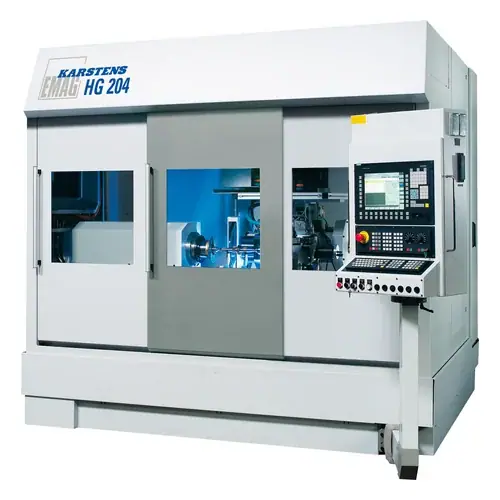
Cylindrical grinding machine
EMAG Karstens HG 204
A cylindrical grinder in the laboratory's grinding group, extending the process classes available for validation beyond tool and surface grinding.
02 · 2 machines
Turning
A Swiss-type production lathe and a toolroom lathe on two different controller families — Sinumerik 828D and Haas NGC.
Connected to Toleron
Swiss-type CNC automatic lathe
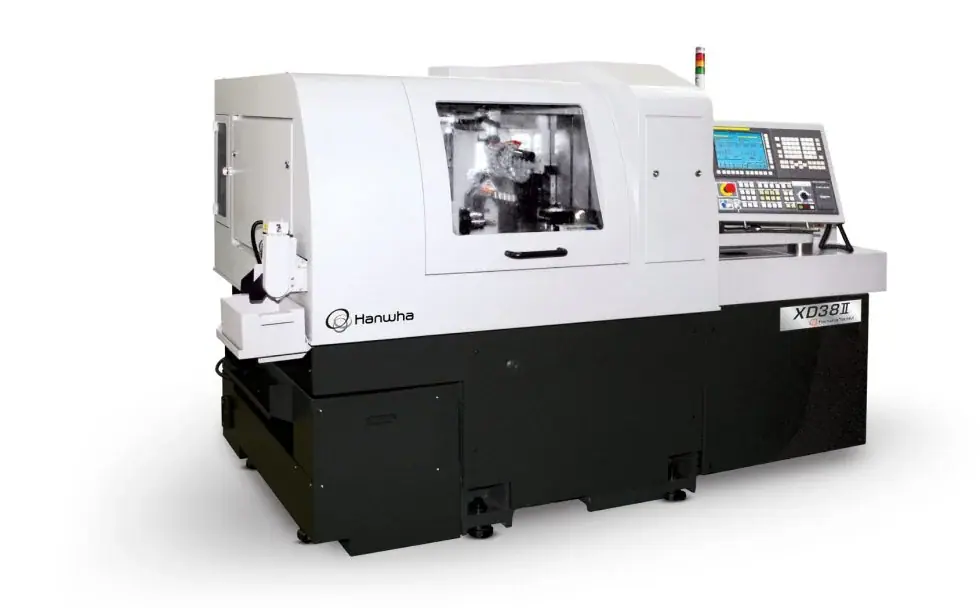
Hanwha XD38II
Siemens Sinumerik 828D
A production sliding-headstock lathe on a second Sinumerik generation — the machine that proved evaluation at the machine end to end: results computed right on the box, with no gaps and no duplicates.
From the controller
Added sensors
Status and program straight from the controller
Added sensor on the spindle drive
Evaluations computed right on the box at the machine
Connected to Toleron
Toolroom lathe
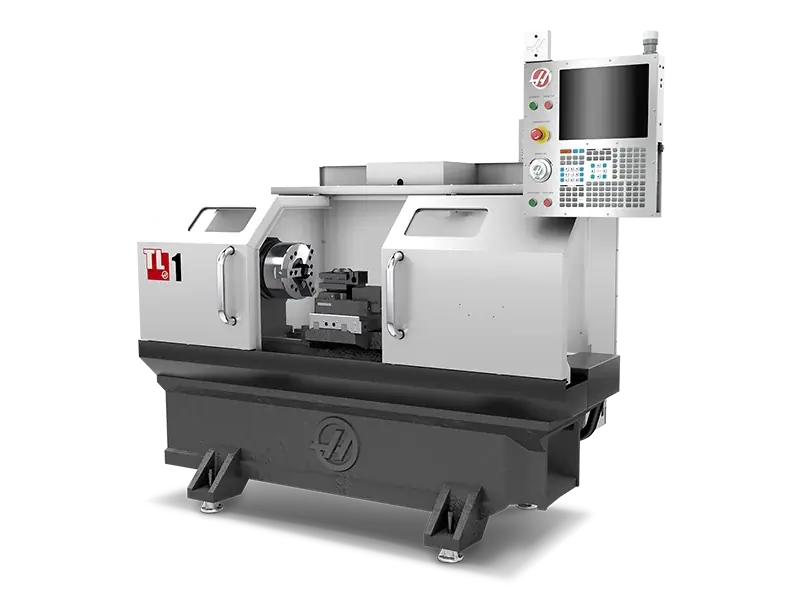
Haas TL-1
Haas Next Generation Control
The fleet's first Haas Automation control, read straight from the controller. Reading resumes cleanly after a restart, and an idle machine is not mis-reported as offline.
From the controller
Status, program and axis positions straight from the controller
Part count at the end of every program
03 · 2 machines
Milling
Ultra-precision and general-purpose machining centres in the laboratory's machine park.
Machine park
Ultra-precision 5-axis machining centre
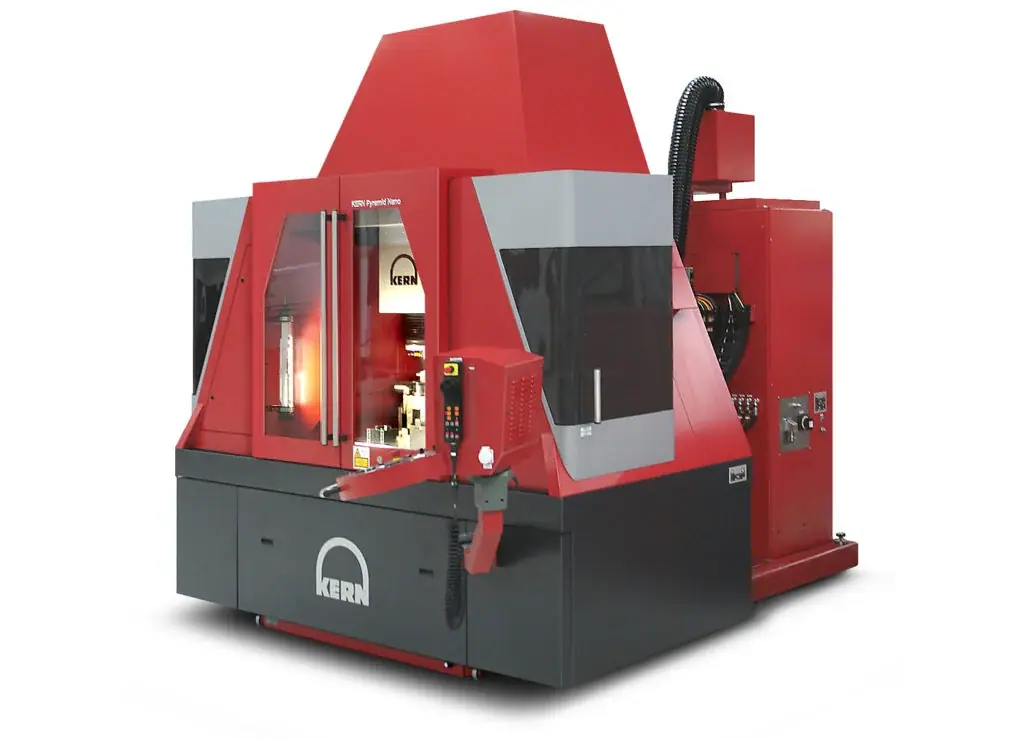
Kern Pyramid Nano
An ultra-precision machining centre for micro-machining and highest-accuracy work — part of the laboratory's machine park and a candidate for future high-resolution process work.
Machine park
Vertical machining centre
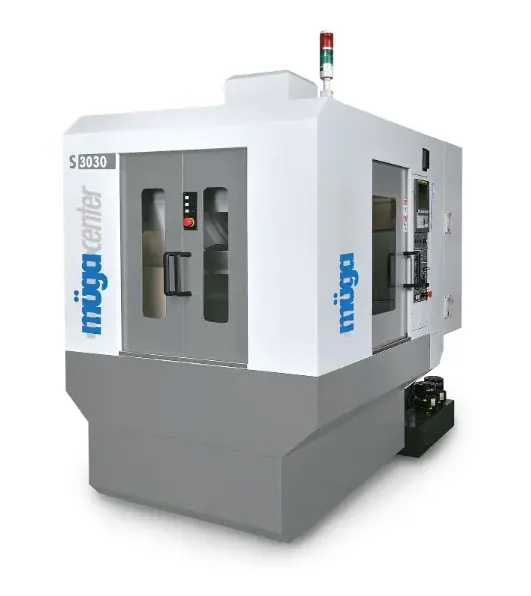
müga center S3030
A compact vertical machining centre in the laboratory's milling group — representative of the general-purpose machining that most shops run.
Controllers
Three controller families, measured live.
Each one speaks its own language. All three end up in the same views and the same evaluations.
Controller
Machine
What is read
Notes
Siemens Sinumerik 840D sl
A.Haas Multigrind CB
Status · program · alarms
Over ten thousand data points found automatically; alarms captured word for word
Siemens Sinumerik 828D
Hanwha XD38II
Status · program
All data points found automatically; second controller generation, same connection
Haas Next Generation Control
Haas TL-1
Status · program · positions · part count
Read-only; reading resumes cleanly after a restart
Hardware & sensors
What is on the machines.
Two kinds of boxes at the machine, a few retrofitted sensors and one server in the house — the setup every result on this site was measured with.
EdgeBox
Industrial computer at the machine: collects controller data and sensor signals, and keeps recording when the network drops out.
AI box
Evaluates the data of a neighbouring EdgeBox right at the machine, over the local network.
Retrofitted sensors
Sensors on spindle and axes on three machines, more on the grinding machines, and a signal from the machine for every pass — for machines with and without a controller interface.
Server in the house
Keeps every recording permanently and runs the evaluations, the dashboards and a local AI assistant.
Connected to Toleronconnected and delivering data todayMachine parkin the laboratory, ready to be connected
Next step
Connect your machine.
Tell us the controller and the process. We will tell you which signals to start with, what an EdgeBox needs at the machine, and what the first weeks look like.